Key Benefits of Hiring an Epoxy Flooring Company Clearwater FL for Your Garage Flooring

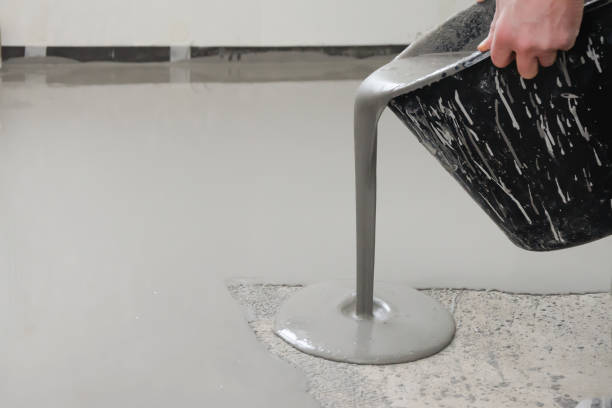
Construction worker pouring self leveling concrete covering on the floor stock photo

Epoxy garage flooring has become one of the most popular choices for both residential and commercial spaces due to its durability, aesthetic appeal, and versatile functionality. Below, we explore the key benefits and advantages that make epoxy a preferred flooring solution.

Enhanced Durability and Longevity

One of the standout features of epoxy flooring is its incredible durability. When properly installed, epoxy creates a tough surface capable of withstanding heavy loads, frequent foot traffic, and daily wear and tear. This makes it an ideal choice for garages where cars, tools, and equipment are regularly moved or stored.

  • Impact resistance: Epoxy surfaces are resistant to dents or cracks caused by dropped tools or heavy objects.
  • Abrasion resistance: The hard resin coating ensures protection from scuffs or scratches over time.
  • Chemical resistance: Epoxy can withstand exposure to oils, gasoline, cleaning agents, and other chemicals without breaking down.

Easy Maintenance

Unlike traditional concrete floors that can absorb stains and require frequent cleaning, epoxy provides a seamless surface that is easy to maintain. Its non-porous nature prevents dirt, oil, or debris from seeping into the material.

  • Spills can be wiped away effortlessly.
  • Regular cleaning requires only sweeping or mopping.
  • Resistant to stubborn stains caused by automotive fluids.

Improved Aesthetic Appeal

Epoxy flooring doesn’t just serve a functional purpose; it also dramatically enhances the appearance of your garage. With a high-gloss finish available in various colors and decorative options like metallics or flakes, epoxy delivers a polished look that complements any space.

Some customization options include: | Feature | Description | |———————-|————————————–| | Color Variations | Wide range of solid colors available | | Metallic Effects | Unique shimmering finishes | | Texture Additives| Anti-slip additives for safety |

Safety Enhancements

  • Reflective finishes enhance visibility by improving lighting within the space.
  • Resistance to temperature fluctuations prevents cracking in colder climates.

Cost Efficiency

  1. Reduced need for repairs due to superior durability.
  2. Minimal maintenance requirements lower ongoing costs.
  3. Extended lifespan compared to alternative materials.

By investing in epoxy flooring upfront, homeowners often save on replacement costs over time while boosting property value.

Eco-Friendly Epoxy Garage Flooring Contractor in Clearwater FL

Modern advancements in epoxy formulations allow for eco-friendly versions that emit fewer volatile organic compounds (VOCs) during installation. These sustainable solutions make it possible to enjoy all the benefits of epoxy while minimizing environmental impact.

Epoxy garage flooring combines practicality with style through unmatched strength, low upkeep requirements, safety features, and design versatility—all while offering excellent value over its lifespan for homeowners looking for long-lasting solutions tailored specifically to their needs.

Key Factors for Choosing Epoxy Flooring Installers Clearwater FL to Ensure Longevity and Durability

Epoxy flooring is widely recognized for its durability, strength, and ability to withstand heavy traffic. However, the longevity and performance of epoxy flooring depend on several critical factors. Proper consideration and careful attention to these elements can ensure that the flooring maintains its quality over time.

1. Surface Preparation

The foundation of durable epoxy flooring starts with proper surface preparation. A poorly prepared substrate can weaken the bond between the epoxy coating and the floor surface, leading to peeling or cracking.

  • Cleaning: The surface must be free from dust, grease, oil, and debris.
  • Repairing cracks and holes: Any damage to the substrate should be filled or leveled before applying epoxy.
  • Grinding or etching: Mechanical grinding or acid etching helps create a textured surface for better adhesion.

2. Quality of Materials

The quality of epoxy resins used in the application plays a significant role in determining durability.

  • High-grade epoxies: Premium-grade materials are more resistant to wear and tear.
  • Appropriate additives: Specific additives can enhance properties such as UV resistance, chemical resistance, or flexibility.

Using substandard materials may result in premature degradation or discoloration.

3. Installation Techniques

  • Layering method: Applying multiple coats (primer coat, base coat, topcoat) enhances durability.
  • Consistent thickness: Uniform thickness prevents weak spots that may become prone to damage.
  • Curing process: Allowing sufficient curing time ensures maximum hardness and longevity.

Skilled professionals with experience in epoxy application are often necessary for achieving optimal results.

4. Environmental Factors

Factor Ideal Condition
Temperature Between 60°F (15°C) and 85°F (30°C), depending on product specifications
Humidity Low humidity levels reduce chances of bubbling
Ventilation Proper airflow aids curing while minimizing odors

Installing under adverse conditions might compromise the bond strength between layers.

5. Maintenance Practices

  • Use soft-bristle brooms or microfiber mops for cleaning.
  • Avoid harsh chemicals like acidic cleaners; instead, use pH-neutral detergents.
  • Place mats at entry points to reduce dirt abrasion.
  • Ensure spills (chemical or oil) are promptly cleaned up to avoid staining.

Neglecting regular maintenance could result in scratches, stains, or dullness over time.

6. Type of Usage

  • Heavy machinery operations can cause wear faster than light foot traffic areas.
  • Garage floors exposed to car tires require specialized coatings with higher tensile strength.

Understanding usage patterns allows for selecting appropriate types of formulations (e.g., industrial-grade vs residential-grade).

By addressing each factor—ranging from material quality to long-term care—you can significantly influence the lasting performance of your epoxy flooring system.

5 Major Advantages of Choosing Epoxy Garage Flooring for Your Space

Epoxy garage flooring has gained immense popularity in recent years due to its durability, aesthetic appeal, and functional benefits. Whether you’re upgrading your residential garage or a commercial workspace, epoxy flooring provides several advantages over traditional flooring options. Below are five major reasons why epoxy garage flooring is an excellent choice for your space.

1. Durability and Longevity

Epoxy coatings are known for their exceptional strength and ability to withstand heavy wear and tear. This makes them ideal for garages that endure frequent vehicle traffic, heavy machinery, or high-impact activities.

  • Resistant to abrasions, scratches, and dents.
  • Handles the weight of vehicles without cracking or chipping.
  • Can last 10–20 years with proper maintenance.

2. Chemical Resistance

One of the standout features of epoxy flooring is its resistance to chemicals, which is particularly useful in environments where spills are common.

  • Resists oil, gasoline, antifreeze, and other automotive fluids.
  • Not affected by household cleaning agents or industrial solvents.
  • Prevents stains from penetrating the surface.

This chemical resistance not only protects the floor but also makes cleanup quick and hassle-free.

3. Low Maintenance

Unlike other flooring materials that require regular upkeep such as waxing or sealing, epoxy minimizes maintenance requirements while maintaining its appearance over time.

  • Easy to clean with a mop or cloth.
  • Dust and dirt do not adhere easily due to its smooth surface.
  • Spills can be wiped off without leaving residue.

With fewer maintenance demands, epoxy saves time and effort in maintaining cleanliness and functionality in your garage space.

4. Enhanced Aesthetic Appeal

Epoxy flooring offers a polished look that enhances the overall aesthetic appeal of your garage. It comes in a wide variety of colors, patterns, and finishes to suit personal preferences or branding needs.

Finish Type Effect
Glossy Finish Reflects light for a brighter atmosphere
Metallic Finish Provides a unique swirl effect resembling marble
Textured Finish Adds grip while still being visually appealing

These customizations allow you to transform what might otherwise be a dull space into an attractive feature of your property.

5. Cost Effectiveness

While the initial installation cost may be higher than some alternatives like concrete paint or vinyl tiles, epoxy offers significant long-term value due to its durability and low maintenance requirements.

  • Reduces replacement costs—requires minimal repairs over time.
  • Increases property value by enhancing functionality and appearance.
  • Energy-efficient properties: A glossy finish can improve lighting by reflecting natural light more effectively within the garage space.

By considering these factors collectively, investing in epoxy can prove more economical than other temporary solutions when evaluated over time.

Final Thoughts

Epoxy garage flooring combines durability with style in a way that few other options can match. Its ability to resist wear-and-tear while providing aesthetic flexibility ensures it meets both practical needs and design preferences efficiently. With benefits ranging from chemical resistance to cost effectiveness, it’s no surprise that homeowners and businesses alike increasingly turn toward epoxy as their preferred choice for garage spaces.

The worker applies gray epoxy resin to the new floor stock photo

Exploring the Strength, Durability, and Benefits of Clearwater Epoxy Garage Flooring

Epoxy flooring is renowned for its exceptional performance attributes, making it a preferred choice for both residential and commercial applications. Its resistance to wear, impressive strength, and long-term durability make it a valuable investment for any space. Below, we explore these key characteristics in greater detail.

Unmatched Resistance Properties

  • Chemical Resistance
    Epoxy flooring resists damage from a wide range of chemicals, including oils, solvents, cleaning agents, and acids. This feature makes it especially suitable for industrial facilities like warehouses and manufacturing plants.
  • Impact Resistance
    The hard surface of epoxy can withstand heavy impacts without cracking or chipping. This makes it ideal for areas subject to frequent use or heavy equipment, such as workshops or garages.
  • Abrasion Resistance
    High foot and vehicle traffic can wear down many floor types over time. However, epoxy coatings are designed to endure continuous wear without degrading.
  • Moisture Resistance
    Epoxy’s non-porous nature protects against water infiltration or damage caused by spills. This moisture resistance ensures longevity in environments like basements or garages where water exposure may occur.

Superior Strength Characteristics

Epoxy floors are known for their remarkable strength compared to traditional flooring systems like tiles or concrete alone. This strength comes from the chemical bond between the resin and hardener during installation.

  • Compressive Strength – Epoxy can support heavy loads without warping or breaking. For example: | Flooring Type | Compressive Strength (PSI) | |———————|—————————–| | Standard Concrete | ~3,000 – 5,000 PSI | | Epoxy Coating | ~10,000 – 12,000+ PSI |
  • Tensile Strength – Once cured properly, epoxy resists stretching forces effectively while remaining rigid under tension.

This robustness makes it suitable not just for residential applications but also for industrial spaces requiring high load-bearing capacity.

Exceptional Long-Term Durability

Durability is one of the most important considerations when choosing flooring materials. When installed correctly and maintained properly, epoxy lasts significantly longer than other floor finishes such as vinyl or laminate.

  1. Seamless Surface
    Because epoxy coatings form a continuous layer across the floor with no gaps or seams:
  2. It minimizes opportunities for dirt accumulation.
  3. Reduces risks associated with cracks spreading over time.
  4. UV Stabilization (For Outdoor Use)
    While unprotected epoxy may yellow when exposed to direct sunlight regularly over time due ultraviolet rays’ effect on polymers—UV-resistant formulations now mitigate this issue effectively if chosen appropriately based final application being indoor vs outdoor focus cases .

Understanding the Resistance, Strength, and Long-Term Durability of Epoxy Flooring

Epoxy flooring is widely recognized for its exceptional strength and durability, making it a popular choice for both residential and commercial settings. Its ability to withstand harsh conditions while maintaining its integrity over time sets it apart from other flooring options. Below is an in-depth look at the factors that contribute to the resistance, strength, and long-term durability of epoxy flooring.

Chemical and Abrasion Resistance

One of the standout features of epoxy flooring is its high resistance to chemical spills and abrasions. This makes it an ideal solution for garages, workshops, and industrial spaces where exposure to harsh chemicals or heavy machinery is common.

  • Chemical Resistance: Epoxy coatings create a non-porous surface that resists damage from oils, solvents, bleach, gasoline, and other chemicals.
  • Abrasion Resistance: The hard surface prevents scratches or wear caused by foot traffic or rolling equipment such as forklifts or heavy tools.

These properties ensure the flooring remains functional and visually appealing even in demanding environments.

High Compressive Strength

Epoxy floors are known for their ability to bear substantial loads without cracking or deforming. This characteristic is essential for areas where heavy equipment or vehicles are used regularly.

Type of Use Weight Capacity
Residential Garage Up to 3 tons
Industrial Facility 10+ tons
Airplane Hangar 20+ tons

This impressive load-bearing capacity underscores why epoxy is often chosen for commercial facilities such as warehouses and showrooms.

Temperature Tolerance

In environments subject to extreme temperature fluctuations, epoxy flooring offers remarkable resilience. It can withstand both heat from machinery operation as well as freezing temperatures without warping or cracking.

  • Suitable for use in cold storage facilities
  • Resists thermal shock in industrial applications

The thermal tolerance of epoxy makes it versatile across multiple industries.

Moisture Resistance

Epoxy’s seamless nature ensures that water cannot seep into the underlying concrete layer. This prevents issues such as mold growth or weakening of the substrate due to prolonged exposure to moisture.

Key benefits include:
– Reduced risk of water damage over time
– Easy cleaning with no concern about trapped liquids

This moisture-resistant property extends the life span of both the coating itself and the floor beneath it.

UV Stability with Proper Additives

When formulated with UV-stable additives, epoxy coatings can resist discoloration caused by sunlight exposure. This is particularly beneficial for spaces that receive natural light throughout the day. Although not all epoxies have inherent UV stability, selecting a product designed for outdoor use can enhance longevity significantly.

Maintenance Requirements

  1. Regular Cleaning: Sweep away debris to avoid surface abrasion.
  2. Avoid Harsh Chemicals: Use mild cleaners specifically formulated for epoxy surfaces.
  3. Apply Protective Coatings: Reapply a topcoat every few years if necessary to reinforce resistance properties.

Maintaining an optimal environment can prevent premature wear and ensure long-term performance.

Epoxy flooring’s combination of chemical resistance, compressive strength, temperature tolerance, moisture protection, and minimal maintenance ensures excellent value over time while retaining both aesthetic appeal and functional efficiency in various applications.


Pros and Cons of Hiring an Epoxy Garage Flooring Contractor Clearwater FL

The worker applies gray epoxy resin to the new floor stock photo

Epoxy flooring has grown in popularity over the years due to its durability, versatility, and sleek finish. However, like any flooring material, it has its advantages and disadvantages. Below, we will explore the major pros and cons of epoxy flooring to help you decide if it’s the right choice for your space.

Pros of Epoxy Flooring

  1. Epoxy floors are highly resistant to wear and tear, making them ideal for high-traffic areas in both residential and commercial settings.
  2. They can withstand impacts from heavy machinery or furniture without cracking or chipping.
  3. The seamless surface makes epoxy floors easy to clean. Dust, dirt, or spills can be wiped away effortlessly with a mop or cloth.
  4. The non-porous nature prevents stains from penetrating the surface.
  5. Compared to materials like hardwood, tiles, or polished concrete, epoxy offers an economical flooring solution while still delivering a professional look.
  6. Epoxy comes in a variety of colors and finishes—metallics, flakes, matte coatings—allowing homeowners and businesses to customize their floors to match their style.
  7. It is highly resistant to chemicals such as oils, solvents, cleaning agents, making it an excellent choice for industrial spaces or garages where chemical spills are more common.
  8. The uniform finish provides a smooth appearance that eliminates cracks where dirt can accumulate—a practical feature especially in hospitals or kitchens where hygiene is essential.

Cons of Epoxy Flooring

  1. Preparing the substrate before applying epoxy involves extensive cleaning and repair work. Additionally, curing times may take days depending on the specific product used.
  2. When wet or coated with oil spills, epoxy floors can become slippery unless special non-slip additives are applied during installation.
  3. While durable compared to many other floor types, epoxy does not last forever; reapplication may be required every 5–10 years depending on usage conditions.
  4. Although strong under most circumstances, extreme impacts or movements in the substrate (like concrete cracks) can lead to fractures in the epoxy layer over time.
  5. Prolonged exposure to sunlight can cause epoxy’s color to fade over time unless UV-stable formulations are used during application.
  6. Uncured epoxy emits strong fumes that may require proper ventilation during installation as they could pose health risks if inhaled excessively.

Table: Quick Comparison of Pros and Cons

Pros Cons
Highly durable Lengthy installation process
Easy maintenance Can become slippery when wet
Aesthetically versatile Needs reapplication after several years
Resists chemicals Susceptible to cracking under stress
Cost-effective Fades with UV exposure unless treated

Epoxy flooring offers a balance between functionality and aesthetics that appeals widely across industries as well as residential contexts like garages or kitchens; understanding these pros and cons will help guide your selection process effectively based on your unique needs.

Clearwater Epoxy Garage Flooring for Durability and Long-Lasting Performance

Epoxy flooring is widely recognized for its exceptional durability and long-lasting performance, making it a popular choice for both residential and commercial spaces. Its robust nature stems from the chemical bond formed between the resin and hardener during the curing process, resulting in a solid, seamless surface that can withstand substantial wear and tear.

Expert Tips from Epoxy Flooring Installers Clearwater FL for Long-Lasting Floors

  1. Epoxy floors are highly resistant to heavy impacts, which makes them ideal for environments with high foot traffic or heavy machinery such as warehouses, factories, and garages.
  2. This impact resistance significantly reduces the likelihood of cracks or dents even in challenging conditions.
  3. One of the most noteworthy qualities of epoxy flooring is its ability to resist various chemicals such as oils, acids, solvents, and other corrosive substances.
  4. This feature ensures longevity in industrial settings where chemical spills are common.
  5. The hardened surface of epoxy floors provides excellent protection against scratches caused by dragging furniture or equipment across them.
  6. This quality makes epoxy a low-maintenance option compared to other flooring types like wood or tile.
  7. Epoxy creates a non-porous barrier that prevents moisture from seeping in, mitigating risks of warping or mold growth.
  8. It is particularly suitable for basements and other areas prone to high humidity levels.

Lifespan of Epoxy Floors

  • Frequency of heavy impacts or abrasions
  • Exposure to direct sunlight (UV radiation)
  • Quality of installation materials used

Maintenance Tips for Prolonging Durability

  • Sweep daily to remove dirt or debris that could cause scratches over time.
  • Mop periodically using mild soap and water; avoid harsh cleaning chemicals that could degrade the finish.
  • Place mats at entry points to minimize dirt tracking onto the surface.
  • Address spills promptly—especially abrasive substances—to prevent any potential damage.
Maintenance Task Frequency Purpose
Sweeping Daily Removes dirt/debris that may scratch
Mopping Weekly/As Needed Keeps surface clean & shiny
Inspecting Monthly Identifies early signs of damage

Factors That May Affect Durability

  1. Improper Installation: Poor preparation of the substrate (e.g., uncleaned concrete) can reduce adhesion strength leading to peeling or cracking over time.
  2. UV Exposure: Direct sunlight exposure can cause discoloration or fading if UV-resistant coatings aren’t applied.
  3. Excessive Weight Loads: Although robust, continued exposure to extreme weight without reinforcement may lead to tiny fractures over prolonged periods.

Epoxy flooring’s reputation for durability is well-earned due to its resistance against physical impacts, chemicals, moisture intrusion, and abrasion when installed correctly and maintained appropriately—making it one of the most reliable surfaces available today across different industries and spaces alike.

How Epoxy Flooring Enhances Aesthetic Versatility in Your Space

Epoxy flooring is widely recognized not only for its durability but also for its ability to enhance the aesthetic appeal of both residential and commercial spaces. Its versatile nature allows property owners to customize flooring designs, patterns, textures, and finishes to suit their specific needs. Below, we explore how epoxy flooring can elevate the appearance of your interiors.

Customizable Colors and Patterns

Epoxy offers an extensive range of color options that can complement virtually any design theme. Whether you prefer bold, vibrant tones or subtle, neutral hues, epoxy can be tailored to match your space’s aesthetic vision.

Key benefits of customizable colors and patterns include: – Monochromatic Floors: Perfect for minimalist settings, providing a clean and sleek look. – Metallic Finishes: Add a sense of luxury with metallic pigments that create a shimmering effect. – Flake Systems: Use decorative flakes in various colors to create texture and hide imperfections. – Abstract Designs: Swirls, gradients, or custom artistic patterns can add uniqueness to your interiors.

High-Gloss or Matte Finishes

One significant advantage of epoxy flooring is the availability of different finish options: – High-gloss finishes: These reflect light efficiently, making spaces appear brighter and more spacious. This feature works well in showrooms or retail spaces where lighting is crucial. – Matte finishes: Provide a subdued yet elegant look ideal for office environments or modern residential designs.

The choice between gloss and matte ensures adaptability to diverse stylistic preferences.

Seamless Appearance

The seamless quality of epoxy floors enhances their visual appeal by creating a continuous surface free from grout lines or gaps. This characteristic not only improves the aesthetics but also contributes to easier maintenance. Seamless surfaces are especially beneficial in areas like kitchens or healthcare facilities where cleanliness is paramount.

Imitation of High-End Materials

Epoxy flooring can mimic premium materials such as marble or granite at a fraction of the cost. By using specialized techniques during application, installers can replicate intricate veining patterns found in natural stone without compromising on affordability or durability.

Material Epoxy Replication Options Cost Comparison
Marble Veined metallic finishes Significantly lower than real marble
Granite Flake system textures Lower cost with similar impact
Terrazzo Colored chips replicated More budget-friendly

This versatility makes epoxy an accessible option for achieving luxurious aesthetics on a budget.

Integration with Branding and Themes

For commercial spaces such as retail stores or corporate offices, epoxy floors can incorporate branding elements seamlessly: – Custom logos embedded into the surface. – Color schemes aligned with brand identity. – Thematic designs that reflect company values or cultural elements.

This customization allows businesses to enhance their overall visual presentation while maintaining functional floor solutions.

Final Thoughts on Aesthetic Versatility

The adaptability of epoxy flooring makes it an exceptional choice for those looking to enhance visual appeal without sacrificing functionality. With endless design possibilities—ranging from custom colors and luxurious textures to seamless surfaces—epoxy provides an ideal balance between style and practicality. When installed professionally, it becomes a transformative element that elevates any space’s ambiance while maintaining its longevity over time.

Why Epoxy Flooring is an Ideal Choice for Garages and Workshops

Epoxy flooring is a popular solution for garages and workshops due to its durability, resilience, and ability to withstand the demanding conditions of these spaces. Whether used in residential or commercial settings, epoxy offers a combination of functionality and aesthetics that make it a reliable flooring option. Below, we explore the key reasons why epoxy flooring stands out as an ideal choice for garages and workshops.

Superior Durability for High-Traffic Areas

  • Impact Resistance: Epoxy can withstand the drop of heavy tools without cracking or chipping.
  • Load-Bearing Capacity: It supports the weight of vehicles, machinery, and equipment with ease.
  • Scratch and Abrasion Resistance: Its tough surface minimizes scratches from dragging objects like metal toolboxes.

Chemical Resistance

In garages and workshops where exposure to chemicals such as oil, grease, gasoline, and cleaning agents is common, epoxy flooring provides excellent resistance against chemical spills. This feature prevents staining and degradation while maintaining its structural integrity over time.

Key Chemical-Resistant Properties:
Spill Type Resistance Level
Automotive Fluids High
Solvents High
Cleaning Chemicals High

This resistance helps keep your floor looking clean while reducing maintenance needs.

Easy Maintenance

  • Regular sweeping removes dust accumulation.
  • Spills can be cleaned with a damp mop or mild detergent.
  • There’s no need for waxing or polishing.

This low-maintenance requirement is particularly advantageous in busy spaces like workshops where time management is critical.

Slip Resistance Options

  • Aluminum oxide
  • Silica sand
  • Polymer grit

These options make epoxy suitable even in environments prone to spills or moisture buildup.

Enhanced Aesthetics

  1. Color Choices: Select from solid colors that match your space’s theme.
  2. Metallic Finishes: Add a touch of elegance with reflective finishes.
  3. Flake Systems: Incorporate decorative flakes for texture and visual interest.

These design variations ensure that garages can look polished while remaining practical.

Long-Term Cost Efficiency

While the upfront cost of installing epoxy may be higher compared to traditional concrete sealants or paints, its long lifespan ensures lower long-term expenses. Its durability reduces the need for frequent repairs or replacements—an important consideration in high-use areas like garages or commercial workshops.

Epoxy flooring combines robustness with customization options tailored specifically for challenging environments such as garages and workshops. Its durability under stress conditions and resistance to damage make it an economical choice that delivers value over years of use.

Worker working on the floor of an industrial building. Construction worker producing grout and finishing wet concrete floor. stock photo

Installing Epoxy Over Existing Tiles: What You Need to Know

Installing epoxy over existing tiles can be an effective way to revamp your flooring without the need for costly and time-consuming tile removal. However, this process requires careful preparation and adherence to specific steps to ensure a durable and visually appealing finish.

Benefits of Applying Epoxy Over Existing Tiles

  • Cost Efficiency: Avoiding tile removal saves on labor and disposal costs.
  • Time-Saving: Eliminating demolition reduces project timelines drastically.
  • Durability: Epoxy provides a strong, long-lasting surface that resists wear and tear.
  • Customizable Design: It offers a variety of finishes, colors, and textures that can transform outdated tiled floors into modern surfaces.

Challenges to Consider

  1. Grout lines or irregularities on the tiles can lead to an uneven epoxy application if not properly leveled.
  2. Some tile materials, such as glazed ceramics, may pose adhesion problems without proper surface preparation.
  3. If moisture is trapped beneath the existing tiles or within porous grout lines, it can cause the epoxy to delaminate over time.

Key Steps for Successful Installation

  1. Clean the existing tiles thoroughly to remove dirt, grease, and any contaminants.
  2. Use a degreaser or specialized cleaning agent for stubborn stains.
  3. Sand or grind the tile surface lightly to create texture for better adhesion.
  4. Fill grout lines with an appropriate leveling compound or self-leveling underlayment.
  5. Ensure a smooth and even surface before applying the epoxy coating.
  6. Apply a high-quality primer designed to adhere specifically to tile surfaces. This step enhances bonding between the tiles and epoxy coating.
  7. Mix the epoxy resin with hardener as per manufacturer guidelines.
  8. Pour and spread evenly using a squeegee or roller while ensuring proper thickness.
  9. Allow sufficient curing time as specified by the product instructions. Avoid foot traffic during this period for optimal results.

Comparison Table: Tile Removal vs. Epoxy Over Tiles

Factor Tile Removal Epoxy Over Tiles
Cost High (labor/material disposal) Lower
Time Longer (demolition & reinstallation) Shorter
Surface Longevity Dependent on new material chosen Durable with proper installation
Complexity Medium Higher due to preparation needs

Tips for Best Results

  • Always consult with professionals if you are unsure about adhesive compatibility or potential moisture concerns in your space.
  • Conduct a patch test on a small area of tile before committing fully to ensure proper adhesion results.
  • Follow product specifications closely during mixing, application, and curing stages.

Epoxy coatings offer excellent opportunities for transforming tiled spaces when installed correctly over existing surfaces.

Expert Tips from an Epoxy Flooring Company in Clearwater FL on Installation

The installation process of epoxy floors is a multi-step and meticulous procedure that requires careful planning and execution. Whether you are applying it in a residential space, commercial environment, or an industrial facility, understanding each phase of the process is crucial to achieving a durable and visually appealing finish. Below is an in-depth guide to the key steps involved in epoxy floor installation.

Preparation of the Substrate

Proper substrate preparation is one of the most critical aspects of installing epoxy flooring. A poorly prepared surface can lead to adhesion issues, delamination, or uneven finishes.

  • Cleaning: The surface must be free from dust, dirt, oil, grease, or any contaminants.
  • Repairs: Cracks, chips, or imperfections in the substrate should be filled using appropriate patching materials.
  • Moisture Testing: Moisture levels should be checked with tools like moisture meters since excess moisture can prevent proper adhesion.
  • Surface Profiling: Mechanical abrasion methods such as shot blasting or diamond grinding are often used to create a textured surface for better adhesion.
Surface Preparation Checklist Importance
Clean and remove debris Ensures proper bonding
Fill cracks and imperfections Prevents weak points
Test for moisture Avoids delamination due to trapped water
Abrade surface Enhances epoxy adherence by creating roughness

Application of Primer

Primers play an essential role in ensuring strong adhesion between the substrate and the epoxy coating. The primer also helps seal porous surfaces and reduces bubble formation during application.

  1. Mix the primer components as per manufacturer instructions.
  2. Use rollers or brushes to evenly apply the primer across the prepared surface.
  3. Allow sufficient curing time before moving on to subsequent layers.

Mixing Epoxy Resin Properly

Mixing epoxy resin requires precision because improper ratios can compromise performance and longevity. Most epoxies consist of two parts – resin (Part A) and hardener (Part B). These components need to be mixed thoroughly according to manufacturer guidelines.

  • Use clean containers free from contaminants.
  • Employ mechanical mixers for consistency.
  • Avoid over-mixing as it may trap air bubbles.

Pro Tip: Always mix small batches if you’re new to handling epoxy resin; this prevents wastage caused by premature curing.

Application of Base Coat

The base coat forms the foundational layer for your epoxy floor system. This layer contributes significantly to overall durability and appearance.

  1. Pour mixed epoxy onto the primed surface.
  2. Spread it evenly using squeegees followed by backrolling with high-quality rollers.
  3. Ensure uniform coverage without pooling or thin spots.

Adding Decorative Elements (Optional)

For spaces requiring aesthetic appeal (like showrooms or living areas), decorative elements such as flakes, quartz aggregates, or metallic pigments can be added after applying the base coat while it’s still wet.

Popular Decorative Options:

  • Colored flakes for texture and color variety
  • Metallic pigments for a glossy marble-like effect
  • Quartz sand aggregates for slip resistance

Topcoat Application

The topcoat is essential for sealing decorative layers (if applied) and providing additional protection against wear and tear. It enhances resistance against chemicals, stains, UV rays (for UV-stable formulations), and scratches.

Steps include: 1. Mix topcoat materials thoroughly. 2. Apply uniformly over dried base coats/decorative layers using rollers or brushes. 3. Allow adequate curing time per product specifications before subjecting it to foot traffic or heavy loads.

Coating Layer Role
Primer Adhesion enhancer
Base Coat Structural foundation
Decorative Layer Aesthetic customizations
Topcoat Protective barrier against environmental factors

Curing Process

Curing times vary depending on factors like product formulation, ambient temperature, humidity levels, etc., but typically range between 24–72 hours before light use is permitted. Full curing may take up to 7 days depending on environmental conditions.

Factors Impacting Curing Time:

  • Temperature: Optimum range is generally 60°F–85°F (15°C–30°C).
  • Humidity: High humidity may slow down curing rates.

Ensure no heavy objects are placed on newly installed floors until they’ve fully cured.

Epoxy floor installation demands attention at every step — from meticulous preparation through precise application techniques — ensuring both functionality and aesthetics align with expectations when performed correctly

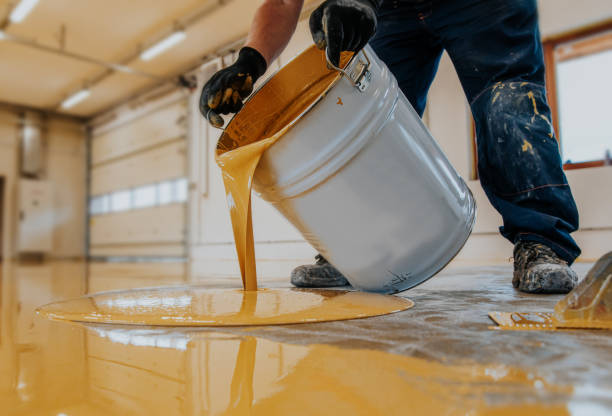
Worker applying a yellow epoxy resin bucket on floor for the final coat. stock photo

Addressing Common Issues: Susceptibility to UV Damage and Delamination in Epoxy Floors

Epoxy flooring is widely recognized for its durability and aesthetic appeal. However, understanding the potential challenges associated with epoxy floors, such as susceptibility to UV damage and delamination, is crucial for ensuring long-term performance. This section explores these common issues and provides actionable solutions to mitigate them.

UV Damage in Epoxy Floors

  • Yellowing or discoloration: Direct sunlight often causes epoxy surfaces to turn yellow or lose their vibrant color.
  • Loss of gloss: Over time, UV exposure can dull the glossy finish of epoxy flooring.
  • Cracking or brittleness: Intense sunlight may weaken the epoxy layers, increasing the likelihood of surface cracks.
Preventative Measures
  1. Applying a polyurethane or polyaspartic topcoat designed for UV resistance can protect epoxy surfaces from sun exposure.
  2. These coatings act as an additional layer, shielding against discoloration while preserving the floor’s finish.
  3. Use epoxy flooring in spaces with limited natural light or where UV exposure is negligible (e.g., basements, workshops).
  4. Installing window films, blinds, or curtains can reduce direct sunlight hitting your floors.
  5. Opting for pigmented epoxies instead of clear coatings can minimize visible yellowing caused by UV light.

Delamination in Epoxy Floors

Delamination occurs when the bond between the epoxy coating and the substrate weakens or fails entirely. This issue often manifests as peeling, bubbling, or lifting of sections of flooring.

Causes of Delamination
  • Moisture intrusion: Excess moisture trapped in the substrate during installation can lead to poor adhesion.
  • Improper surface preparation: Failure to clean and abrade the substrate adequately can hinder bonding.
  • Substrate movement: Concrete shifting due to temperature variations or structural settling could disrupt adhesion over time.
  • Low-quality materials: Using subpar epoxy products that lack sufficient adhesion properties increases vulnerability to delamination.
Preventative Measures
  1. Clean away dust, oil stains, and debris before applying epoxy.
  2. Mechanically abrade surfaces using diamond grinders or shot blasters for optimal bonding conditions.
  3. Perform tests like calcium chloride tests or relative humidity tests to detect excess moisture in concrete slabs before application.
  4. Apply a moisture barrier primer if necessary.
  5. Invest in reputable brands that offer durable products with strong adhesive properties suited for your specific environment.
  6. Conduct installations within recommended temperature ranges specified by manufacturers.
Common Issue Prevention Strategy
Yellowing/Discoloration Use UV-resistant topcoats; reduce direct sunlight
Loss of Gloss Apply protective coatings; limit outdoor applications
Cracking/Brittleness Avoid prolonged sun exposure; use quality materials
Peeling/Delamination Ensure proper prep; test for moisture before installation

Recognizing these challenges enables property owners and installers to take proactive measures that improve both functionality and appearance over time while minimizing maintenance needs.


Transform Your Garage with an Epoxy Garage Flooring Contractor in Clearwater FL for a Durable and Stylish Finish

Worker, coating floor with self-leveling epoxy resin in industrial workshop. stock photo

Transforming your garage floor with epoxy flooring is an excellent way to combine durability, functionality, and style. Garages are often subjected to heavy traffic, oil spills, and other forms of wear and tear. However, epoxy flooring offers a long-lasting solution that not only protects your garage floor but also enhances its aesthetic appeal. Below, we explore how epoxy flooring can transform your garage into a more practical and attractive space.

Benefits of Epoxy Flooring for Garages

  • Durability: Epoxy creates a strong surface capable of withstanding heavy vehicles, tools, and machinery without cracking or chipping.
  • Resistance: It is highly resistant to common garage issues such as oil spills, chemicals, stains, moisture, and abrasions.
  • Easy Maintenance: The smooth surface makes it easy to clean up dust, dirt, or spills with minimal effort.
  • Enhanced Appearance: Epoxy coatings come in various colors and finishes (metallics or flakes), offering numerous customization options.
  • Improved Safety: Many epoxy coatings include non-slip additives to reduce the risk of accidents when the floor is wet.

Key Steps in the Transformation Process

  1. Remove dirt, debris, grease stains, or any chemical residue from the concrete surface.
  2. Power washing may be necessary for heavily soiled floors.
  3. Fill cracks or holes in the concrete using patching materials suitable for garage floors.
  4. Smooth out bumps or uneven areas for optimal adhesion.
  5. Etch the surface using a concrete etching solution or grinder to open up pores in the concrete.
  6. Vacuum or sweep thoroughly after etching to remove any residual dust.
  7. A primer coat can improve adhesion between the floor surface and epoxy coating if required by your product.
  8. Apply multiple layers depending on desired thickness while following manufacturer instructions.
  9. Use decorative flakes or metallic pigments before sealing for added visual appeal.

Design Options for Stylish Results

Style Option Description Best For
Solid Colors Single-color coatings provide simplicity Minimalistic designs
Decorative Flakes Small chips embedded into epoxy create texture Industrial & modern spaces
Metallic Finishes Swirling patterns mimic natural stone High-end garages
Custom Designs Logos or patterns printed underneath clear coats Personalized aesthetics

Each style offers unique ways to elevate a standard garage floor into one that’s functional yet visually appealing.

By opting for epoxy flooring in your garage renovation project, you ensure not only excellent protection against wear but also an opportunity to express creativity in design choices. The combination of durability and style makes it an ideal investment for homeowners looking to enhance their space’s usability while maintaining visual appeal over time.

Step-by-Step Preparation Process for Clearwater Epoxy Garage Flooring

Proper preparation is crucial before applying epoxy coatings to ensure a durable and long-lasting finish. Neglecting this step can lead to issues such as peeling, bubbling, or uneven surfaces. Below is a detailed guide on how to prepare your garage floor for epoxy application effectively.

Preparing the Area for Epoxy Flooring Installers Clearwater FL

Before starting, remove all items from the garage, including cars, tools, storage units, or any other objects. This allows for unobstructed access to the entire floor surface.

  • Sweep the floor thoroughly to eliminate loose dirt and debris.
  • Use a vacuum cleaner for hard-to-reach corners or cracks.
  • Scrub grease stains or oil spills with a degreaser and rinse properly with water.

1. Examine the Floor Condition

Inspect the concrete slab for imperfections that may interfere with epoxy adhesion.

Common Issues to Check: | Issue | Solution | |——————–|————————–| | Cracks | Fill cracks with concrete filler or patching compound. Let it dry fully. | | Chips or divots | Smooth out imperfections using a concrete grinder or leveling agent. | | Moisture presence | Test by taping plastic sheeting overnight; condensation indicates high moisture levels that need addressing before coating. |

2. Acid Etching or Mechanical Grinding

For the epoxy coating to bond effectively, it’s essential to prepare the surface texture by either acid etching or mechanical grinding.

Acid Etching Process:

  1. Mix muriatic acid (or an alternative etching solution) with water in appropriate proportions.
  2. Pour evenly over the surface while wearing protective gear.
  3. Scrub lightly using a stiff-bristled brush.
  4. Rinse thoroughly multiple times until all residue is removed and pH levels are neutralized.

Mechanical Grinding:

Use a concrete grinder equipped with diamond abrasives for optimal results: – Grind in circular motions across the entire floor. – Vacuum dust and residue after grinding for a clean finish.

Tip: Mechanical grinding is often preferred as it provides better control over surface preparation without introducing excess moisture into the slab.

3. Ensure Surface Dryness

Epoxy coatings require a completely dry surface for proper adhesion: – Allow at least 24–48 hours after washing or etching before proceeding. – Use fans or dehumidifiers in humid climates to speed up drying time.

4. Mask Off Adjacent Areas

To protect walls, baseboards, and other nearby surfaces: – Apply painter’s tape along edges where you want clean lines. – Cover outlets or built-in structures with plastic sheeting if necessary.

5. Primer Application (Optional but Recommended)

Applying an epoxy primer helps enhance adhesion while reducing potential bubbles during application: 1. Choose an appropriate primer compatible with your epoxy product. 2. Roll on a thin coat using a paint roller designed for rough surfaces. 3. Allow adequate curing time as specified by the manufacturer before moving forward.

By following these meticulous preparation steps, you set the foundation for successful epoxy coating installation that will last for years without issues like peeling, cracking, or uneven textures—providing both functionality and aesthetic appeal to your garage flooring project!

Step-by-Step Preparation Process Before Applying Epoxy Coatings

Proper preparation is a critical step before applying an epoxy coating to your garage floor. Failing to prepare the surface correctly can lead to poor adhesion, uneven finishes, and a shorter lifespan for your flooring. Below is a detailed, professional guide on how to prepare your garage floor for optimal epoxy application.

1. Clear and Clean the Workspace

Before beginning the preparation process, ensure that the workspace is free from any obstructions or debris.

  • Clear out all items: Remove tools, equipment, vehicles, and storage units from the garage.
  • Sweep thoroughly: Use a broom or leaf blower to remove loose dirt and dust particles from the floor.
  • Wash with detergent: Mop the surface with water and a degreaser or detergent to remove oil stains and grease buildup.

2. Assess the Floor Condition

Inspecting your garage floor will help you identify problem areas that need extra attention.

  • Check for cracks: Look for visible cracks or chips in the concrete surface.
  • Identify stains: Locate areas with stubborn oil stains or chemical residues that might affect epoxy adhesion.
  • Assess moisture levels: Perform a moisture test by taping down plastic sheeting onto various sections of the floor for 24 hours. If condensation forms underneath, the concrete may not be suitable for epoxy without additional sealing steps.

3. Repair Surface Imperfections

Preparing an even surface ensures better results during epoxy application.

  • Fill cracks and holes: Use an epoxy crack filler or concrete patch compound to repair damaged areas of the floor.
  • Grind uneven surfaces: For rough or uneven spots, use an industrial grinder with diamond grinding pads to flatten them.
  • Smooth sharp edges: For larger chips along expansion joints or corners, smooth them out using a trowel and repair material.

4. Etch or Grind the Concrete Surface

To achieve proper adhesion between epoxy coatings and concrete, it’s essential to create texture on an otherwise smooth surface.

Method Description
Acid Etching Apply a diluted muriatic acid solution evenly across the floor to open up pores in concrete for better absorption of epoxy coatings. Afterward, neutralize with baking soda and rinse thoroughly with water.
Mechanical Grinding Use a heavy-duty grinding machine equipped with diamond-tipped blades to leave behind a slightly roughened surface ideal for bonding with epoxy resin.

Key Tip: Always wear appropriate safety gear such as gloves, goggles, and masks when working with acid etching solutions or grinders.

5. Clean Thoroughly Again

  • Vacuum up dust: Use an industrial vacuum cleaner designed for fine particles left behind by grinding processes.
  • Mop repeatedly: Rinse away residue from acid etching using clean water multiple times until no traces remain.
  • Let dry completely: Ensure that your garage floor is fully dry before moving forward; residual dampness can compromise adhesion.

6. Apply Primer (If Necessary)

Depending on your chosen type of epoxy system, some manufacturers recommend priming concrete prior to applying base coats of epoxy.

Primers serve several purposes: – Improve overall adhesion. – Seal porous surfaces effectively. – Reduce potential bubbles caused by gas release from porous concrete underneath epoxy layers.

Follow all instructions provided by your primer’s manufacturer regarding curing times before proceeding further into coating stages.

By following these preparation steps meticulously, you set yourself up for success in achieving durable and visually appealing results when applying an epoxy coating on your garage floor while also extending its lifespan significantly through proper groundwork practices beforehand.

A construction worker apply grey epoxy resin in an industrial hall stock photo

Understanding the Application Process of Epoxy Garage Flooring for a Professional Finish

Achieving a professional finish with epoxy garage flooring requires attention to detail, proper technique, and the right tools. The application process consists of several key steps that ensure durability, longevity, and aesthetics. Below is a detailed guide on how to apply epoxy coatings like a pro.

Tools and Materials Needed

  • Epoxy Resin and Hardener (choose the appropriate type based on your climate and usage requirements)
  • Paint rollers (with an extension pole)
  • Squeegee or notched trowel for even spreading
  • Plastic buckets for mixing epoxy components
  • Painter’s tape and plastic sheeting for masking areas
  • Safety gear: gloves, goggles, respirator mask
  • Anti-slip additives (optional for increased safety)

Step 1: Mixing the Epoxy Components

  1. Measure both components according to manufacturer instructions to maintain the right ratio. Improper ratios can lead to curing failures.
  2. Use a mechanical mixer or drill attachment to stir thoroughly until uniform consistency is achieved.
  3. Only mix small batches you can apply within 20–30 minutes, as epoxy cures quickly once combined.

Step 2: Applying the Base Coat

  • Pour mixed epoxy onto sections of your garage floor in ribbons or puddles.
  • Spread it using a squeegee or notched trowel in thin, even layers.
  • Use a roller for finishing touches to smooth out marks left by spreading tools.

Ensure that coverage remains consistent across all areas while avoiding pooling or overly thick layers which can cause uneven curing.

Step 3: Adding Color Chips (Optional)

  1. Scatter chips evenly across each section while working systematically.
  2. Avoid over-saturating any particular area; aim for uniform dispersion.
  3. Allow chips to settle naturally before moving on.

Color flakes not only improve aesthetics but can also help mask minor imperfections in concrete substrates.

Step 4: Applying Topcoat

  1. Mix topcoat resin just as you did with previous layers.
  2. Apply using rollers over fully cured base coats—curing typically takes 12–24 hours depending on product specifications.
  3. Consider incorporating anti-slip additives during this step if desired.

The topcoat should be allowed sufficient time (48–72 hours) for full curing before heavy items like vehicles are introduced onto its surface.

Common Application Mistakes to Avoid

Mistake Why It’s Problematic How to Avoid
Skipping Surface Preparation Leads to poor adhesion Thoroughly clean and etch concrete
Using Expired Epoxy Results in improper curing Check product expiration dates
Rushing Curing Time Weakens structural durability Follow manufacturer’s curing guidelines
Uneven Mixing Ratios Causes tacky or brittle surfaces Measure precisely before mixing

By understanding these steps and precautions during application, you can achieve a professional-grade finish with minimal effort required later for repairs or refinishing tasks. When done correctly, epoxy flooring transforms garages into both functional spaces and visually appealing environments fit for years of use without compromising durability or style.

Exploring Popular Epoxy Colors and Styles to Enhance Your Space

When it comes to enhancing your garage with epoxy flooring, selecting the right colors and styles can significantly transform the overall look and feel of the space. Epoxy flooring not only improves durability but also offers a variety of aesthetic options, allowing you to customize your garage to suit your preferences. Below, we delve into popular epoxy colors, finishes, and styles that can elevate your garage into a more functional and visually appealing area.

Popular Epoxy Colors for Garage Floors

  • Neutral Tones: Shades like gray, beige, and taupe are widely preferred due to their timeless appeal. These colors seamlessly blend with most interiors and provide a clean, polished look.
  • Metallic Finishes: For homeowners seeking a modern or high-end look, metallic epoxy coatings in hues like silver, bronze, or copper offer an eye-catching shimmer effect.
  • Earthy Colors: Browns, greens, or rust tones work well for creating a natural or industrial aesthetic that complements rustic designs.
  • Bold Colors: Vibrant shades such as red, blue, or yellow make a bold statement and add energy to the space while helping create designated activity zones within larger garages.

Popular Epoxy Flooring Styles

  1. This style incorporates decorative flakes spread over the base coat before applying the topcoat.
  2. Flakes come in different sizes and colors to create a terrazzo-like appearance.
  3. Benefits include added slip resistance and enhanced durability while hiding imperfections on the floor surface.
  4. Metallic pigments are added to the resin during application to create flowing patterns that mimic marble or liquid metal effects.
  5. This is an excellent option for those looking for a unique luxury finish.
  6. Quartz granules mixed with epoxy resin produce an ultra-durable surface ideal for high-traffic areas.
  7. Available in various color combinations for added customization.
  8. Simple yet effective; this style emphasizes clean lines with one uniform color across the entire floor.
  9. Ideal for minimalist designs.

Matching Epoxy Colors with Garage Themes

To achieve harmony between your epoxy flooring and overall garage theme: – Pair neutral-toned flooring with sleek cabinets or industrial shelving systems. – Use bold-colored epoxy floors if you want focal points within recreational garages (e.g., home gyms). – Opt for metallic finishes paired with modern lighting fixtures for contemporary designs.

Style Key Features Best For
Flake Flooring Adds texture; hides imperfections Busy garages; multipurpose spaces
Metallic Coating Luxurious finish; unique patterns Modern or high-end settings
Quartz-Filled System Enhanced durability; slip-resistant Commercial-grade utility spaces
Solid Color Minimalistic; clean Simplistic designs

Final Thoughts on Style Selection

Choosing the right epoxy style depends on personal preference as well as functional needs like durability requirements or design cohesiveness with other elements in your garage setup. By exploring these popular options carefully, you can strike an optimal balance between visual appeal and practicality when upgrading your space with epoxy flooring solutions.

Budgeting Tips and Cost Factors from an Epoxy Flooring Company in Clearwater FL

When planning to upgrade your garage with epoxy flooring, understanding the associated costs and budgeting tips is essential to ensure a successful project. Several factors influence the cost of epoxy flooring, including material type, surface preparation needs, labor expenses, and additional customizations. Below is an in-depth look at these factors and practical tips to help you stay within budget.

Factors Influencing the Cost of Epoxy Flooring

  1. Solid Epoxy: The most durable and long-lasting option but also the most expensive. Ideal for high-traffic garages.
  2. Water-Based Epoxy: A more affordable choice with lower VOC emissions but less durable than solid epoxy.
  3. Solvent-Based Epoxy: Offers enhanced durability but may require professional installation due to strong fumes.
  4. Larger garages will naturally require more materials and time, increasing overall costs.
  5. Costs can increase if significant surface preparation is needed (e.g., filling cracks or leveling uneven floors).
  6. Specialized cleaning or grinding may also add to expenses depending on the condition of your garage floor.
  7. Adding decorative flakes, metallic finishes, or custom designs can raise material costs.
  8. Complex patterns often require more labor hours, increasing installation charges.
  9. Labor Costs
    Professional installation ensures a flawless finish but comes at an additional cost. Labor rates vary by region and experience level.
  10. Protective topcoats for added durability
  11. Anti-slip additives for improved safety
  12. Maintenance tools like cleaning solutions or repair kits

Cost Breakdown Table

Item Estimated Cost Range (Per Sq Ft)
Solid Epoxy Materials $4 – $7
Water-Based Epoxy $2 – $5
Surface Preparation $1 – $5
Decorative Additions $2 – $10
Professional Installation $3 – $12

Note: Prices vary based on location and supplier.

Budgeting Tips for Your Project

  • Assess Your Garage Floor Condition First: Conduct a thorough inspection of your garage floor to identify cracks, holes, or uneven surfaces that might require additional preparation work.
  • Obtain Multiple Quotes: Comparing estimates from several contractors can help you secure competitive pricing while ensuring professional quality.
  • Consider DIY Options Where Possible: If you’re comfortable with manual tasks such as cleaning and applying base coats, opting for partial DIY could save on labor costs.
  • Choose Simpler Designs: Intricate patterns or premium finishes like metallic coatings are appealing but can significantly raise expenses. Opting for a single-color finish with minimal detailing can reduce costs.
  • Plan for Long-Term Maintenance Costs: While epoxy floors are low-maintenance compared to other options, budgeting for occasional resealing or repairs will ensure their longevity.

Balancing Cost With Quality

While focusing on budget constraints is important, prioritizing quality materials and proper application should not be overlooked. Cutting corners by choosing cheaper products or skipping critical steps in surface preparation may lead to premature wear-and-tear, resulting in higher repair costs down the line.

By carefully analyzing cost factors and incorporating these budgeting tips into your planning process, you’ll be able to achieve durable epoxy flooring that enhances both the functionality and aesthetics of your garage without exceeding your financial limits.


Tips for Choosing the Right Epoxy Flooring Company Clearwater FL for Your Project

Self-leveling epoxy. Leveling with a mixture of cement floors stock photo

Selecting the right epoxy flooring contractor is critical to ensuring the success, durability, and aesthetic appeal of your project. With so many professionals in the market, it can be overwhelming to make the best choice. By following a structured approach, you can identify a contractor who meets your specific needs and delivers high-quality results.

1. Evaluate Credentials and Licensing

Ensure that any contractor you consider is fully licensed and insured to perform epoxy flooring work in your area. This protects you from liability in case of accidents and ensures compliance with local regulations.

  • Licensing: Ask for proof of their active license or certification.
  • Insurance: Verify that they carry general liability insurance and workers’ compensation coverage.

2. Review Portfolio and Past Work

A professional contractor should be able to provide examples of their previous projects. Reviewing their portfolio allows you to assess their style, expertise, and ability to handle projects similar to yours.

Key questions to explore:
– Do they specialize in residential, commercial, or industrial epoxy flooring?
– Can they provide images or videos of past projects?
– Are there any particular designs or finishes they excel at?

3. Understand Their Process and Materials

High-quality epoxy flooring depends on both skilled application techniques and superior materials. Discuss the contractor’s process from surface preparation to final coating application.

Some considerations include:
– What type of epoxy do they use (e.g., 100% solid epoxy vs. water-based)?
– How do they prepare surfaces (e.g., cleaning, grinding, repairing cracks)?
– Do they apply multiple layers for added durability?

Material Type Benefits Considerations
100% Solid Epoxy High durability; chemical-resistant More expensive; requires skillful application
Water-Based Epoxy Affordable; lower VOC emissions May not last as long under heavy traffic

4. Request Detailed Estimates

A reputable contractor should provide a detailed written estimate that includes all costs associated with labor, materials, equipment rental (if applicable), and additional charges like surface preparation.

When reviewing estimates:
– Look out for vague pricing or hidden fees. – Ask whether clean-up services are included post-installation. – Confirm warranty information for both labor and materials provided.

5. Compare Reviews and References

Reputation matters when choosing an epoxy flooring professional. Take time to research online reviews on platforms like Google, Yelp, or Angie’s List while also requesting references directly from the contractor.

Questions to discuss with references include:
1. Was the project completed within the agreed timeline?
2. Did the finished product meet expectations?
3. How responsive was the contractor during communication?

By reaching out to past clients, you gain firsthand insights into the quality of service offered by a particular business.

Red Flags to Avoid When Hiring an Epoxy Flooring Contractor

Be cautious if you notice any of these warning signs: – Unwillingness to provide portfolio samples or references. – Extremely low quotes compared to competitors (this could signal poor quality materials). – Lack of clear communication or professionalism during initial discussions.

Exploring the Benefits of Clearwater Epoxy Garage Flooring with Quality Materials and Techniques

When it comes to epoxy flooring, the materials and techniques used during installation play a critical role in determining the durability, appearance, and overall performance of the floor. Selecting high-quality materials and relying on precise application methods ensures a long-lasting and aesthetically pleasing result. Below, we’ll explore the key aspects that highlight the importance of quality in epoxy flooring projects.

The Importance of Choosing an Epoxy Garage Flooring Contractor Clearwater FL

  • Durability: High-quality epoxies resist wear and tear effectively, making them ideal for high-traffic areas or industrial settings.
  • Chemical Resistance: Superior products offer better protection against chemicals, oils, and other corrosive substances.
  • Aesthetic Appeal: Premium-grade epoxies create a smoother finish with richer color depth compared to lower-quality alternatives.
  • Adhesion Strength: Quality epoxy materials adhere better to concrete surfaces, reducing the chances of peeling or bubbling over time.

Types of Epoxy Coatings

Type Key Features Common Applications
100% Solid Epoxy Highly durable; no solvents; thick application Industrial floors
Water-Based Epoxy Low VOCs; eco-friendly; thinner consistency Residential garages, light traffic areas
Solvent-Based Epoxy High adhesion; strong chemical resistance Commercial kitchens, warehouses

The choice of material should be based on your specific project requirements to ensure optimal performance.

Importance of Proper Techniques by Epoxy Flooring Installers Clearwater FL

  1. Thoroughly clean the substrate to remove dust, grease, or contaminants.
  2. Repair cracks or damage on the concrete surface before proceeding.
  3. Use mechanical grinding or shot blasting to achieve proper surface roughness (known as surface profile).
  4. Follow manufacturer instructions precisely when mixing resin and hardener.
  5. Inaccurate ratios may lead to improper curing or reduced strength.
  6. Apply primer coats evenly using rollers or brushes for better adhesion.
  7. Pour liquid epoxy systematically starting from one corner for even coverage.
  8. Use spiked rollers during application to release trapped air bubbles.
  9. Allow sufficient curing time (usually 24–72 hours) depending on temperature and humidity levels.

Risks of Compromising on Quality

  • Premature delamination or peeling
  • Cracks caused by weak adhesion
  • Uneven coatings leading to aesthetic dissatisfaction
  • Reduced lifespan requiring early replacement

Investing in quality upfront not only enhances durability but also minimizes maintenance costs over time.

By understanding the significance of using top-tier materials combined with skilled application methods, you can achieve an epoxy floor that meets both functional and visual expectations efficiently.

Worker working on the floor of an industrial building. Construction worker producing grout and finishing wet concrete floor. stock photo

Assessing Experience and Expertise When Selecting an Epoxy Flooring Professional

When choosing an epoxy flooring professional, the experience and expertise of the contractor are crucial elements to ensure a successful project. Assessing these factors requires a methodical approach to evaluate their qualifications, past performance, and technical knowledge. Below are key considerations to help you make an informed decision.

Importance of Experience in Epoxy Flooring

  • Knowledge of Different Types of Epoxy Coatings: Experienced contractors can recommend the most suitable type for your project, whether it’s self-leveling epoxy, anti-slip coatings, or decorative options like metallic epoxy.
  • Understanding Surface Preparation: Proper surface preparation is critical for adhesion and longevity. A skilled professional ensures that concrete is properly cleaned, repaired, and primed before application.
  • Handling Complex Installations: Projects with intricate designs or unique specifications require advanced technical skills developed over years of practice.

Evaluating Technical Expertise

  1. Certifications and Training: Does the contractor hold relevant certifications or attend ongoing training programs? Certifications from industry associations indicate their commitment to maintaining high standards.
  2. Specializations: Some professionals specialize in industrial floors while others focus on residential or commercial applications. Ensure their expertise aligns with your project needs.
  3. Use of Advanced Techniques: Cutting-edge techniques such as UV-resistant applications or moisture vapor barrier installations may be necessary depending on your environment.

Asking About Past Projects

  • Request photographs or videos showcasing completed installations.
  • Ask about any challenging projects they’ve handled and how they overcame obstacles.
  • Inquire whether they’ve worked on similar surfaces (e.g., older concrete floors vs new builds).

Table: Key Questions to Evaluate Experience & Expertise

Topic Questions to Ask
Certifications Do you hold any certifications specific to epoxy flooring applications?
Project History Can you share examples of similar projects you’ve successfully completed?
Specialized Knowledge Are there specific types of epoxy or environments you specialize in?
Problem-Solving Ability How do you address challenges such as uneven substrates or moisture issues?

Conducting Interviews and Site Visits

  • Observe how they inspect your space; experienced contractors will note critical details like cracks, humidity levels, and traffic patterns.
  • Pay attention to whether they explain their process clearly without using overly technical jargon.

By thoroughly evaluating both experience and expertise, you can select an epoxy flooring professional who not only meets but exceeds your expectations for quality workmanship.

Transparency, Communication, and What to Ask Your Epoxy Flooring Contractor

Selecting the right epoxy flooring contractor is not only about assessing their skills and experience; it also requires clear communication and transparency to ensure your expectations align with their capabilities. Asking the right questions can help establish trust, clarify project details, and avoid misunderstandings. Below are some essential considerations and questions to guide your discussion with a potential contractor.

Importance of Transparency in Epoxy Flooring Projects

Transparency is critical for building a professional relationship with your contractor. A reliable epoxy flooring contractor should:
– Provide clear explanations about their process and timeline.
– Share detailed cost breakdowns upfront.
– Address potential challenges or constraints honestly.

When transparency is prioritized, it minimizes the risk of unexpected costs, delays, or subpar results.

Questions to Ask Your Epoxy Flooring Contractor

  1. Understand the range of options available (e.g., self-leveling epoxy, metallic epoxy, or decorative flake systems).
  2. Request a breakdown of costs for materials, labor, preparation work, and any additional fees.
  3. Preparation is key to ensuring longevity; inquire about cleaning processes or repairs they perform beforehand.
  4. Clarify what aspects are covered under warranty (e.g., adhesion issues or cracking) and how long it lasts.
  5. Reputable contractors should be willing to share testimonials or contact information from satisfied customers.
  6. This helps set realistic expectations around timelines for surface preparation, curing timeframes, and application processes.
  7. Ensure that proper protocols are in place to protect workers as well as occupants of the property.

Key Attributes of Effective Communication

Effective communication between you and your contractor ensures smoother execution of your project: – Regular updates on progress are important—ask how often they will check in throughout the process. – Make sure there’s clarity on who your main point of contact will be. – Request written documentation for contracts or agreements covering all discussed terms.

Red Flags to Watch Out For

While evaluating contractors during initial discussions, keep an eye out for these warning signs: – Vague responses regarding pricing or unavailable itemized quotes. – Reluctance to show certifications/licenses. – Lack of reviews or negative feedback online.

Table: Sample Checklist for Initial Consultation

Question Why It Matters
What experience do you have? Ensures familiarity with projects similar in scope/requirements
Can I see examples of past work? Provides insight into quality standards
Are permits required for this job? Helps avoid compliance issues later

By ensuring open communication lines combined with thorough vetting practices outlined above,it becomes easier ensuring

Transparency, Communication, and What to Ask Your Epoxy Flooring Contractor

When it comes to hiring the right epoxy flooring contractor for your project, transparency and open communication are essential. Establishing a clear dialogue with your contractor ensures that expectations are set, potential challenges are addressed early, and the project is completed successfully. Below are key considerations for fostering transparency and communication, as well as essential questions to ask your contractor before work begins.

Why Transparency Matters

Transparency builds trust between you and your epoxy flooring contractor. It allows you to fully understand the scope of the project and ensures there are no hidden surprises in terms of costs or timelines. A transparent contractor will provide:
– Clear, itemized estimates detailing labor, materials, and any additional fees.
– Honest timelines that account for preparation, application, and curing times.
– Full disclosure regarding warranties or guarantees on materials and workmanship.

Communication Best Practices

Effective communication with your epoxy flooring contractor prevents misunderstandings during the project. Here’s how to maintain strong communication:
Establish a Point of Contact: Identify a primary contact person from both sides to streamline updates and address concerns quickly.
Schedule Regular Updates: Request progress updates at different stages of the installation process—such as surface preparation, epoxy application, and curing stages.
Use Written Agreements: Ensure all agreements regarding costs, timelines, materials used, or changes to the scope of work are documented in writing.

Questions to Ask Your Epoxy Flooring Contractor

  1. Look for itemized details about labor costs, material types (e.g., solvent-based vs water-based epoxy), surface preparation methods (e.g., grinding or shot blasting), coatings applied (e.g., primer or topcoat), etc.
  2. An experienced contractor should provide examples or references from past projects similar in size or complexity to yours.
  3. Proper surface preparation is essential for long-lasting results. Confirm that they will clean, repair cracks if present, and use techniques like diamond grinding for optimal adhesion.
  4. It’s crucial to know how the contractor plans to address unforeseen problems such as moisture vapor emissions or substrate imperfections.
  5. Ask about warranties covering materials used as well as workmanship quality over time.
  6. Viewing physical samples of their work—or photos—can help you assess their style and quality standards firsthand.

Red Flags to Watch For

While interviewing contractors can provide valuable information about their qualifications, it’s also important to recognize potential red flags: – Reluctance to provide references or share examples of past work. – Vague answers regarding preparation techniques or material quality. – Pressure tactics insisting on upfront payment without a contract in place. – Overpromises related to curing times without addressing environmental factors like temperature or humidity control.

Final Thoughts on Partnering With Your Contractor

Partnering with an epoxy flooring professional who values transparency ensures smoother communication throughout every stage of the project—from initial consultation through post-installation follow-up care. By asking informed questions upfront and maintaining open dialogue throughout the process, you’ll be better equipped for success while minimizing risks associated with miscommunication or unclear expectations.


Top Reasons to Hire an Epoxy Garage Flooring Contractor Clearwater FL

Epoxy garage flooring has become a popular choice in both residential and commercial settings due to its durability, appearance, and cost-effectiveness. It offers numerous benefits compared to traditional concrete or other flooring materials. Below, we explore the key advantages of using epoxy for garage flooring.

Epoxy coatings are known for their toughness and ability to withstand heavy loads.

  • Resistance to Wear and Tear: Epoxy is highly resistant to scratches, cracks, and impacts caused by dropped objects or repetitive vehicle traffic.
  • Chemical Resistance: It can withstand exposure to automotive fluids, oil spills, gasoline, and cleaning chemicals without deteriorating over time.
  • Moisture Protection: Epoxy acts as a protective barrier against moisture infiltration that could damage the underlying concrete.

Improved Aesthetic Appeal

It creates a polished, professional finish that blends functionality with visual appeal.

  • Customizable Design Options: Whether you prefer solid colors, metallic finishes, or decorative flakes, epoxy can be customized in various styles.
  • Glossy Finish: The shiny surface enhances lighting in your garage by reflecting light more effectively.
  • Seamless Appearance: Its smooth surface eliminates cracks or joints commonly seen in concrete floors.

Low Maintenance Requirements

This reduces the hassle associated with keeping your garage looking clean despite regular use.

  • Dirt and debris can be easily swept away due to its smooth texture.
Cleaning Task Time Required Cleaning Tools Needed
Sweeping debris 5–10 minutes Broom or dry mop
Removing stains 10 minutes Mild detergent + cloth
Polishing (optional) 20 minutes Epoxy-safe polish

Safety Features

Despite its sleek finish, epoxy offers safety enhancements when properly installed.

  • Slip Resistance: Additives like anti-slip agents can be incorporated into epoxy coatings for improved traction in wet conditions.
  • Fire Resistance: Some epoxy formulations are designed with fire-resistant properties which add an extra layer of safety to your space.

Cost Efficiency

  1. Fewer repairs required due to its durability.
  2. Reduced need for replacement—epoxy lasts for years when installed correctly.
  3. Improved property value through enhanced floor aesthetics.

When weighing these factors against upfront installation costs, it becomes clear why so many homeowners opt for this solution.

Top Reasons to Hire Epoxy Flooring Installers Clearwater FL for Your Garage

Freedom Epoxy
7003 114th Ave Suite D, Largo, FL 33773
+18668055734
https://freedomepoxy.com/contact

From its robust durability to customizable designs and low maintenance needs, epoxy remains one of the best choices for modern garage floors. Homeowners seeking functionality combined with aesthetic appeal will find this material a worthwhile investment that enhances both usability and style within their space.

Exploring the Durability and Strength of Epoxy Coatings

Epoxy coatings are widely recognized for their exceptional durability and strength, making them a preferred choice across residential, commercial, and industrial settings. Understanding what makes epoxy so robust can help you decide if this material is suitable for your specific needs.

Key Properties That Enhance Durability

Epoxy coatings owe their durability to a combination of chemical composition and application techniques.

  • Abrasion Resistance: The tough surface of epoxy can withstand heavy foot traffic, abrasion from machinery or tools, and impact damage far better than most alternative coatings.
  • Adhesion Strength: Epoxy bonds tightly to properly prepared concrete surfaces, ensuring longevity and preventing peeling or delamination over time.
  • Moisture Barrier: Its impermeable surface creates a barrier that protects underlying materials from moisture infiltration, reducing the risk of cracks or other structural issues in flooring.

Real-Life Applications Demonstrating Longevity

The strength and durability of epoxy coatings are evident based on their use in demanding environments.

Application Area Durability Benefits
Garage Floors Withstands heavy vehicles, oil leaks, and tire marks without cracking or staining.
Industrial Spaces Handles high-impact equipment use and resists chemical exposure effectively.
Commercial Buildings Retains aesthetic appeal despite frequent foot traffic over many years.
Hospitals & Labs Provides hygienic surfaces resistant to chemicals and frequent cleaning routines.

Comparing Epoxy with Alternative Flooring Options

  • Tiles:Although durable initially, tiles are prone to cracking under heavy loads or impacts over time. Grout lines can also degrade quickly compared to an epoxy’s seamless finish.
  • Wood Flooring:Wood lacks resistance to moisture damage and scratches when compared with epoxy.
  • Plain Concrete:While sturdy in itself, uncoated concrete is more likely to absorb stains and develop cracks without the protective barrier offered by epoxy.

Tips to Maximize Durability

To ensure your epoxy coating delivers long-term results: 1. Properly prepare the substrate by cleaning thoroughly and repairing any cracks before application. 2. Choose high-quality epoxy formulations designed for your specific needs (e. g. , industrial-grade vs residential-grade).
3. Apply multiple layers as recommended for added protection against wear-and-tear. 4. Perform routine maintenance by cleaning spills immediately and avoiding abrasive cleaning tools.

Epoxy’s ability to combine uncompromising strength with practical versatility has made it one of the most reliable flooring solutions available today for both residential spaces and demanding industrial settings alike.

Exploring the Durability and Strength of Epoxy Coatings

Epoxy coatings are renowned for their outstanding durability and strength, making them a premier choice for both residential and commercial flooring applications. Understanding the factors that contribute to their resilience can help homeowners and businesses make informed decisions about their flooring investments.

What Makes Epoxy Durable?

  1. Epoxy coatings are highly resistant to chemicals such as oils, grease, cleaners, and other industrial chemicals.
  2. The tough surface of epoxy can withstand heavy foot traffic, repeated impacts, and wear from machinery or vehicles without showing significant signs of wear or damage.
  3. Epoxy is impermeable to water when properly sealed.

Strength Under Pressure

  • Impact Resistance:Its tough composition enables it to absorb impacts effectively without chipping or shattering.
Property Epoxy Coating Performance
Compressive Strength Excellent
Impact Resistance High
Abrasion Resistance Outstanding
Chemical Resistance Superior

Longevity of Epoxy Coatings

  • Most high-quality epoxy floors last between 10-20 years, even in high-demand settings.
  • For garages and light commercial spaces, lifespans often exceed this range with regular cleaning and care.
  • Periodic re-sealing enhances durability by maintaining protection against scratches and wear over time.

Benefits in High-Traffic Areas

  • Residential Garages:It can withstand vehicle weight, dropped tools, spills, and more without compromising the surface integrity.
  • Warehouses:Forklifts and pallet jacks are no match for the toughness of an epoxy-coated floor.
  • Retail Spaces:Its resistance keeps floors looking polished despite constant foot traffic.

By leveraging the inherent qualities of epoxy coatings—such as their chemical resistance, compressive strength, impact tolerance, and moisture impermeability—you benefit from a long-lasting solution that performs reliably in demanding conditions.

Why Epoxy is a Popular Choice for Residential and Commercial Flooring

Epoxy has emerged as one of the leading choices for residential and commercial flooring due to its unique combination of durability, aesthetic appeal, and versatility.

Key Features That Make Epoxy Popular

  1. Epoxy coatings are highly resistant to wear and tear, making them ideal for high-traffic areas.
  2. Their resistance to abrasion ensures they maintain their appearance over time.
  3. Can incorporate decorative flakes or pigments for enhanced visual appeal.
  4. Offers seamless designs that complement both modern and traditional interiors.
  5. The seamless surface prevents dirt or debris from getting trapped.
  6. Easy to clean with basic sweeping, mopping, or pressure washing.
  7. Does not require frequent reapplication or refinishing compared to other flooring options.
  8. Many epoxy products are formulated with low VOCs (volatile organic compounds), ensuring minimal environmental impact.
  9. Long lifespan reduces the need for frequent replacements, contributing to sustainable practices.

Comparison: Residential vs.

Feature Residential Use Commercial Use
Typical Areas Garages, basements, kitchens Warehouses, showrooms, factories
Aesthetic Requirements Focus on design & color customization Often prioritizes durability & functionality
Common Additions Decorative flakes or matte finishes Anti-slip coatings

Benefits in Residential Spaces

For homes, epoxy flooring offers an unparalleled blend of style and practicality. In garages or basements prone to moisture issues or oil stains, epoxy serves as a protective barrier that minimizes damage while enhancing the room’s overall look. Its reflective surface brightens darker spaces while giving them a polished appearance.

Advantages in Commercial Environments

In commercial settings like retail stores or manufacturing facilities where foot traffic is constant and heavy machinery is used regularly, epoxy’s robustness ensures long-term performance without significant wear. Moreover, its ability to seamlessly cover large areas reduces maintenance downtime—a critical factor in operations-driven businesses.

Why People Prefer Epoxy Over Alternatives

Epoxy’s combination of functionality and aesthetics sets it apart from traditional flooring like concrete or tiles.

  • It does not absorb liquids easily.
  • Offers superior tensile strength compared with uncoated materials.
  • Its installation demands fewer joints/seams compared with tiled structures—resulting in cleaner surfaces overall.

By delivering exceptional value across diverse applications while meeting both structural demands & stylistic preferences seamlessly—epoxy continues gaining traction among homeowners & businesses alike who seek long-term flooring solutions tailored precisely toward evolving needs/preferences effectively aligned alongside budget constraints effectively matched accordingly too wherever feasible simultaneously deployed accordingly preemptively handled systematically well-adapted respectively therein efficiently implemented proactively optimized cohesively integrated ultimately finalized succinctly executed robustly structured outcome-prioritized fundamentally viable cost-effective solution guaranteed impactful results longer-lasting evident subsequently better-aligned stakeholder satisfaction-focused adaptive strategy solutions deployed adequately durable efficient streamlined execution guaranteed…

Clearwater Epoxy Garage Flooring: Transform Your Floors with High-Quality Solutions

High-quality epoxy solutions have revolutionized the flooring industry, offering unparalleled aesthetics, strength, and functionality. Whether used in residential spaces, commercial buildings, or industrial facilities, epoxy flooring has become a preferred choice for those seeking superior performance coupled with modern design. In this section, we will explore how premium epoxy solutions can transform your floors into durable, elegant surfaces.

Enhancing Aesthetic Appeal

Epoxy coatings provide a seamless and polished look that enhances the overall appearance of any space.

  • Metallic Finishes:Create a stunning visual effect with metallic pigments that mimic liquid metal or marble.
  • Flake Systems:Add decorative flakes to achieve texture and visual complexity while improving slip resistance.
  • Solid Colors:Opt for bold or neutral tones to create clean and vibrant looks suited for homes or commercial spaces.
  • Matte or Gloss Finishes:Choose between high-gloss surfaces for a reflective effect or matte finishes for understated elegance.

These options make it easy to transform dull concrete slabs into visually appealing statement floors.

One of the key reasons epoxy is so transformative is its exceptional durability. High-quality epoxy coatings resist wear and tear from regular foot traffic, heavy machinery, and chemical spills.

  • Residential Use:Perfect for garages, basements, kitchens, and patios where durability is critical.
  • Commercial Spaces:Ideal for retail stores, hospitals, restaurants, or office spaces due to their resistance to scratches and stains.
  • Industrial Applications:Withstand the demands of warehouses and manufacturing facilities by tolerating heavy loads and abrasions.

Investing in a high-grade epoxy solution ensures your floor remains intact even after years of use.

Promoting Low Maintenance

Epoxy-coated floors are highly practical due to their ease of maintenance. Their non-porous surface prevents dirt, dust, oil stains, or liquids from penetrating the material. Cleaning typically involves basic sweeping and mopping using mild detergents.

  • Reduced Cleaning Time:No need for intensive scrubbing or special cleaning products.
  • Stain Resistance:Spills are easily wiped away without leaving permanent marks.
  • Seamless Surface:Minimizes crevices where dirt can accumulate over time.

These qualities make epoxy an especially attractive option for busy households or high-volume commercial environments where cleanliness is paramount.

Environmentally Friendly Solutions

Many high-quality epoxy coatings now incorporate eco-friendly formulations designed to reduce environmental impact. These sustainable options are free from harmful VOCs (Volatile Organic Compounds) while maintaining the same level of performance as traditional alternatives.

  1. You contribute to better indoor air quality.
  2. You reduce exposure to potentially harmful chemicals during application.
  3. You align with sustainability goals without compromising on quality.

Look for brands certified as green-friendly when transforming your space with epoxy flooring.

Comparing Costs vs Benefits

While installing high-quality epoxy flooring may involve an upfront investment greater than other traditional materials like tile or laminate flooring initially — its long-term benefits outweigh costs over time due largely reduced repair/replacement costs alongside increased property aesthetics/utility-wise value enhancement .

Feature Epoxy Coatings Traditional Flooring (e.g., Tile)
Durability Extremely durable Susceptible chipping cracking
-EcoFriendly (Some types) Eco-options readily available

Understanding the Versatility of Epoxy for Various Applications

Epoxy is an incredibly versatile material that has gained widespread use across industries due to its unique properties. Its adaptability and myriad applications make it a go-to solution for projects ranging from industrial flooring to artistic designs. Below, we explore how epoxy’s versatility allows it to excel across diverse fields.

Applications of Epoxy

Epoxy’s chemical composition provides exceptional strength, durability, and resistance to wear.

  1. Epoxy coatings are popular in basements, garages, and kitchens due to their ability to withstand heavy foot traffic and resist stains.
  2. Glossy finishes enhance aesthetic appeal while providing a seamless look.
  3. Widely used in factories, warehouses, and hospitals thanks to its non-slip properties and chemical resistance.
  4. Easy maintenance reduces downtime for businesses while maintaining hygiene standards.
  5. Epoxy resin is used in creating jewelry, tabletops, or even river tables by mixing with pigments or embedding objects within the resin.
  6. Clear epoxy can also be layered for depth and visual interest.
  7. Applied on metal surfaces like pipelines or machinery as an anti-corrosive layer that extends their lifespan significantly.
  8. Used as a coating on boats because of its waterproofing qualities and resistance to saltwater corrosion.
  9. Epoxy serves as a highly effective adhesive in construction or repairs for bonding materials such as wood, metal, or plastic.

Key Features That Enable Versatility

Feature Benefit Example Use Case
High Durability Resists wear-and-tear over time Garage floors; heavy equipment surfaces
Chemical Resistance Protects against spills of oils, acids, or chemicals Industrial flooring; hospital settings
Customizable Finish Can be altered with colors, textures, or additives Decorative flooring; art installations
Waterproof Qualities Provides protection against moisture damage Marine coatings; bathrooms
Adhesive Strength Forms strong bonds between diverse materials Construction adhesives

Advantages of Epoxy’s Versatility

  1. Cost-Effective Solutions: Its multi-functional nature reduces the need for specialized materials across different domains.
  2. Longevity: Whether in industrial settings or creative projects, epoxy ensures long-lasting results due to its resilience.
  3. Ease of Application: Modern formulations allow for user-friendly application methods like rolling or pouring.
  4. Eco-Friendly Options Available: Some manufacturers produce low-VOC (volatile organic compounds) epoxy formulations that are safer for the environment.

Epoxy’s versatility lies not only in its ability to adapt but also in the sheer variety of finishes it offers—from high-gloss coatings to textured non-slip surfaces—making it suitable for virtually any requirement you may have. This adaptability cements its position as one of the most useful materials available today across both residential and industrial sectors alike.

Choosing the Best Epoxy Flooring Company Clearwater FL: Why Epoxy Outshines Traditional Flooring

When it comes to choosing a flooring solution, the options can be overwhelming. From traditional materials such as tiles, hardwood, and concrete to modern innovations like epoxy coatings, each option offers unique advantages and drawbacks. Below, we’ll delve into how epoxy compares to more conventional flooring choices in terms of durability, aesthetics, cost-effectiveness, and maintenance.

Durability

One of the standout features of epoxy is its exceptional durability. Unlike traditional flooring options that may wear down over time, epoxy coatings are designed to withstand heavy traffic and resist damage from impacts or abrasions.

Epoxy Coatings:– Highly resistant to physical wear and tear. – Can endure exposure to chemicals like oils and solvents without degrading. – Provides excellent protection against moisture damage or stains.

Traditional Flooring:Tiles: While durable, tiles may crack under heavy impact. Grout lines can also become discolored or damaged over time.Hardwood: Prone to scratches and dents with extended use. Moisture can lead to warping or rotting.Concrete: Durable but susceptible to cracking and dusting without proper sealing.

Aesthetic Appeal

Epoxy coatings offer unmatched versatility in terms of design possibilities.

Epoxy Coatings:– Available in high-gloss finishes that enhance brightness by reflecting light. – Capable of integrating decorative features such as metallic pigments or flake additives. – Seamless surface appearance for a clean aesthetic.

Traditional Flooring:Tiles: Offers different colors and patterns but often lacks seamless integration.Hardwood: Provides a classic appearance but limited design flexibility outside wood grain options.Concrete: Minimalistic but generally less visually appealing without additional treatments like staining or polishing.

Cost Effectiveness

The long-term cost benefits of epoxy make it an attractive option despite higher initial installation costs compared to some traditional materials.

Factor Epoxy Coatings Traditional Flooring
Initial Costs Moderate Varies (low-moderate-high)
Maintenance Costs Low Moderate-high
Replacement Cycle 10–20 years or more 5–15 years (varies by type)

While epoxy may require professional installation initially, its longevity reduces the need for frequent replacements or repairs associated with other materials.

Maintenance Requirements

Keeping floors clean and well-maintained is crucial in both residential and commercial settings. Epoxy stands out due to its ease of maintenance compared to traditional floors.

Epoxy Coatings:– Nonporous surface makes cleaning simple—just sweep or mop as needed. – Resistant to dust accumulation thanks to its seamless finish. – Requires minimal upkeep beyond periodic resealing every few years.

Traditional Flooring:Tiles: Grout lines require regular scrubbing; broken tiles may need replacement.Hardwood: Must be refinished periodically; sensitive to water spills that can cause warping.Concrete: Requires regular sealing or polishing treatments for optimal performance.

Which Is Better?

The choice between epoxy coatings and traditional flooring ultimately depends on your specific needs. If you’re prioritizing durability, low maintenance, customization options, and long-term value—especially in high-performance areas like garages or commercial spaces—epoxy is often the superior choice. However, traditional flooring types such as hardwood might appeal more for spaces where warmth or natural aesthetics take precedence over functionality. By carefully assessing your requirements for each space alongside budgetary considerations, you can determine which option best meets your expectations for style and performance alike.

How to Choose the Best Epoxy Coating for Your Specific Needs

Selecting the right epoxy coating for your specific project can seem overwhelming given the wide variety of products on the market. However, by considering key factors such as application type, environmental conditions, and desired aesthetics, you can ensure you’re making an informed decision tailored to your needs. Here’s a guide to help you choose the best epoxy coating.

Understand Your Application Requirements

The first step in choosing an epoxy coating is to clearly define the purpose and scope of your project.
– Is this for residential, commercial, or industrial use?
– Will it be applied indoors or outdoors?
– What kind of surface is being coated (e. g. , concrete, wood, metal)?
– What level of durability and resistance do you need?

For instance:
| Application Type | Recommended Epoxy Type |
|——————————–|————————————————————–|
| Garage floors | High-build or self-leveling epoxy with chemical resistance |
| Industrial warehouses | Heavy-duty epoxy with abrasion resistance |
| Decorative residential floors | Metallic or colored epoxies for aesthetic appeal |
| Outdoor surfaces | UV-resistant epoxies for weather durability |

Consider Environmental Conditions

Environmental factors play a critical role in determining which epoxy will perform well over time.

  • Temperature:Some epoxies have specific curing ranges and may not be suitable for extreme heat or cold conditions. Look for temperature-tolerant formulations if needed.
  • Moisture Levels:For areas prone to dampness (e. g. , basements), moisture-tolerant epoxies are essential to prevent peeling or bubbling.
  • UV Exposure:If applying epoxy outdoors or in areas exposed to sunlight, opt for UV-stable coatings that resist yellowing over time.

Prioritize Durability and Resistance

Different epoxy formulations excel in varying types of resistance.

  • Impact Resistance:Essential for high-traffic zones such as warehouses or industrial facilities where heavy loads are frequently moved around.
  • Abrasion Resistance:Perfect for surfaces subject to scrapes or regular friction from machinery movement or foot traffic.

Evaluate Aesthetic Preferences

Epoxy coatings aren’t just functional—they can be visually transformative as well.

  1. Solid Colors:A simple choice that offers a clean and modern appearance.
  2. Metallic Epoxies:Create luxurious finishes with depth and shimmer perfect for decorative spaces.
  3. Flake Systems:Add texture and color variability by embedding decorative flakes into clear coats.
  4. Clear Coats:Highlight natural surfaces like polished concrete while adding a protective layer.

Compare Costs vs Benefits

While budget is always a consideration, choosing a lower-cost product that doesn’t meet performance requirements can lead to long-term expenses in repairs and reapplications. Balance affordability with quality by focusing on products offering durability and warranties that align with your expectations.

Consult Professionals When Needed

If you’re uncertain about which product suits your needs best—or if proper application techniques feel beyond reach—consult an experienced professional for guidance on product selection and installation.

By focusing on these factors—application requirements, environmental considerations, functionality goals—you’ll ensure that your chosen epoxy delivers both performance excellence and lasting results tailored specifically to your project’s needs.